Motorcycle safety involves more than protective gear and following traffic rules. Modern motorcycles may include technology that helps riders maintain control in challenging situations. Anti-lock braking systems, traction control, and electronic rider aids can provide assistance, but they cannot replace training, sound judgment, or careful riding.
These systems help riders compare models and recognize both the benefits and limits of the technology.
When comparing safety features, riders can also explore available motorcycles and review individual model specifications to find options suited to their riding needs.
How Anti-Lock Braking Systems Work
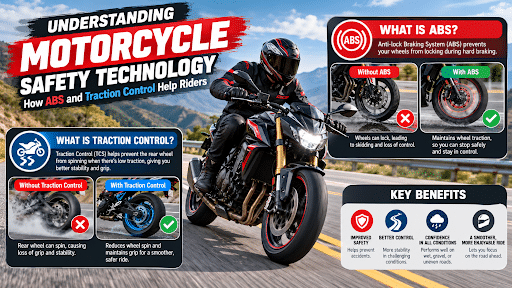
An anti-lock braking system, or ABS, helps prevent the wheels from locking during hard braking. Sensors monitor wheel speed and the system can adjust brake pressure when a wheel is about to stop rotating while the motorcycle is moving.
ABS can help riders maintain steering control during sudden stops, especially on paved roads. However, it does not guarantee a shorter stopping distance in every situation. Road surface, tires, speed, and rider input still matter.
Check whether ABS is standard or optional on the exact model, and read the owner’s manual to understand its operation.
What Traction Control Does
Traction control helps manage rear-wheel spin during acceleration. If the system detects excessive wheel spin, it may reduce engine power to help the tire regain grip.
This can be useful on slippery pavement or changing road surfaces, but it cannot create traction where little exists. Gravel, oil, wet leaves, loose dirt, and worn tires can still affect control.
Systems vary: some offer adjustable settings, while others provide limited assistance or none. Learn the controls before riding and never treat traction control as permission to travel faster.
Other Electronic Rider Aids
Depending on the model, motorcycles may offer riding modes, cornering-sensitive ABS, or cruise control. Riding modes can adjust throttle response and sometimes the behavior of other systems. Cornering-sensitive ABS uses additional movement data to help manage braking while the motorcycle is leaning.
Features and names differ by manufacturer and model year. Check the specifications and owner’s manual rather than assuming every motorcycle has the same equipment. Technology is most useful when riders understand its purpose and limits.
Tires, Brakes, and Maintenance Still Matter
Electronic systems depend on a motorcycle being in good condition. Suitable tire tread and correct pressure help provide grip, while maintained brakes support predictable stopping. Headlights, brake lights, indicators, and mirrors help riders see and be seen.
Check tires and brakes according to the manufacturer’s schedule, and address warning lights promptly. Incorrect replacement parts or maintenance can also affect how some systems work.
Match Features to Your Riding Conditions
Consider where you ride most often. City riders may value ABS and visibility in changing traffic. Highway riders may prioritize predictable braking and clear lighting, while riders on mixed surfaces should confirm whether a motorcycle and its electronic features suit the intended terrain.
Compare individual model specifications instead of assuming every motorcycle in a category includes the same equipment. The motorcycle and powersports selection at Texas Motor Sports can be one reference point when identifying models to research further.
Technology Works Best With Training
Safety systems cannot predict every hazard or correct every mistake. Training helps riders practice braking, cornering, hazard awareness, and safe following distances. A properly fitted helmet, gloves, jacket, trousers, and boots remain important too.
New riders should choose a manageable motorcycle and build skills gradually. Experienced riders can also benefit from refresher training, particularly when switching to a motorcycle with different weight, power, or controls.
Conclusion
ABS, traction control, and other rider aids can offer valuable assistance, but their capabilities vary by model and conditions. Understanding the systems, maintaining tires and brakes, and developing safe habits all contribute to more informed riding.
Frequently Asked Questions
1. Does ABS prevent every motorcycle crash?
No. ABS can help reduce wheel lock during braking, but it cannot overcome poor traction, excessive speed, or unsafe decisions.
2. Is traction control useful on wet roads?
It may help manage wheel spin, but riders must still slow down, use smooth inputs, and allow extra stopping distance.
3. Do all motorcycles have ABS?
No. Availability depends on the model, trim, market, and regulations. Check the exact specifications.
4. Can electronic rider aids replace training?
No. They supplement, rather than replace, training, protective gear, awareness, and responsible riding.
5. How can I check a motorcycle’s safety features?
Review the manufacturer’s specifications and owner’s manual for the exact model year, or ask a qualified dealer to explain unfamiliar features.
Read More: Which Yamaha Motorcycle Is Right for You? A Complete Guide