
The engine compartment contains many of a vehicle’s essential mechanical and electrical systems. Although it is not always visible during everyday driving, its condition can reveal a great deal about maintenance, workmanship, and attention to detail.
A clean and organized engine bay can make routine inspections easier and give the vehicle a more finished appearance. However, improving the compartment should involve more than cosmetic cleaning. Component compatibility, heat management, accessibility, and safe installation must remain the main priorities.
Begin With a Careful Inspection
Before making changes, inspect the engine compartment under suitable conditions with the engine switched off and cool. Look for loose covers, cracked plastic, damaged wiring insulation, deteriorated hoses, fluid residue, and missing fasteners.
If you notice a leak, burning smell, damaged connection, or another potential mechanical problem, address it before undertaking cosmetic work. Cleaning or covering a problem without investigating its cause can make future diagnosis more difficult.
Distinguish Wear From a Mechanical Fault
Dust and ordinary surface grime are common, particularly in vehicles driven regularly. By contrast, fresh fluid residue, unusual discoloration, or damaged components may require professional assessment.
A tidy appearance is useful, but it should never be treated as proof that the engine and its supporting systems are mechanically sound.
Understanding the Function of Engine Covers
Engine covers can give the compartment a more organized appearance by concealing selected components and creating a consistent visual surface. Depending on the original design, some covers may also serve limited protective, acoustic, or airflow-related purposes.
Their function varies by vehicle, so owners should consult the manufacturer’s information before replacing or removing them. A decorative panel should not obstruct ventilation, interfere with moving parts, or replace a component that has an important thermal or protective role.
Selecting a Suitable Replacement
When evaluating a custom engine cover begin by confirming the vehicle’s exact model, year, engine configuration, and mounting arrangement. Check the material, dimensions, fastening method, and clearance requirements.
A custom design may offer a distinctive finish, but it still needs to fit securely and remain suitable for the environment under the hood. Ask the supplier whether the component is designed for direct replacement or requires additional preparation.
Choosing Appropriate Materials
Engine compartments can experience significant temperature changes, vibration, and exposure to fluids. The suitability of a material depends on its location and the conditions it is designed to withstand.
Molded plastics are common in factory covers because they can be shaped around complex layouts. Composite materials may provide a different appearance or other design characteristics, but they must be specified for the intended application.
Check More Than Appearance
Inspect the finished component for consistent edges, sound mounting points, and signs of damage. If the supplier makes claims about heat resistance or other technical properties, request relevant specifications.
Do not assume that a material suitable for a decorative interior trim piece is also suitable for an engine compartment. Temperature ratings and compatibility matter.
Keeping Maintenance Access Available
An engine bay should remain practical for routine checks and repairs. Oil-fill points, service locations, fluid reservoirs, electrical connections, and other maintenance items must remain accessible as required.
Before installing a new cover, compare its shape with the existing layout. Confirm that it does not obstruct essential labels, service points, wiring, hoses, or ventilation openings.
If a component must be removed for routine maintenance, the installation should allow that process to be completed without damaging clips or surrounding parts.
Cleaning the Engine Compartment Safely
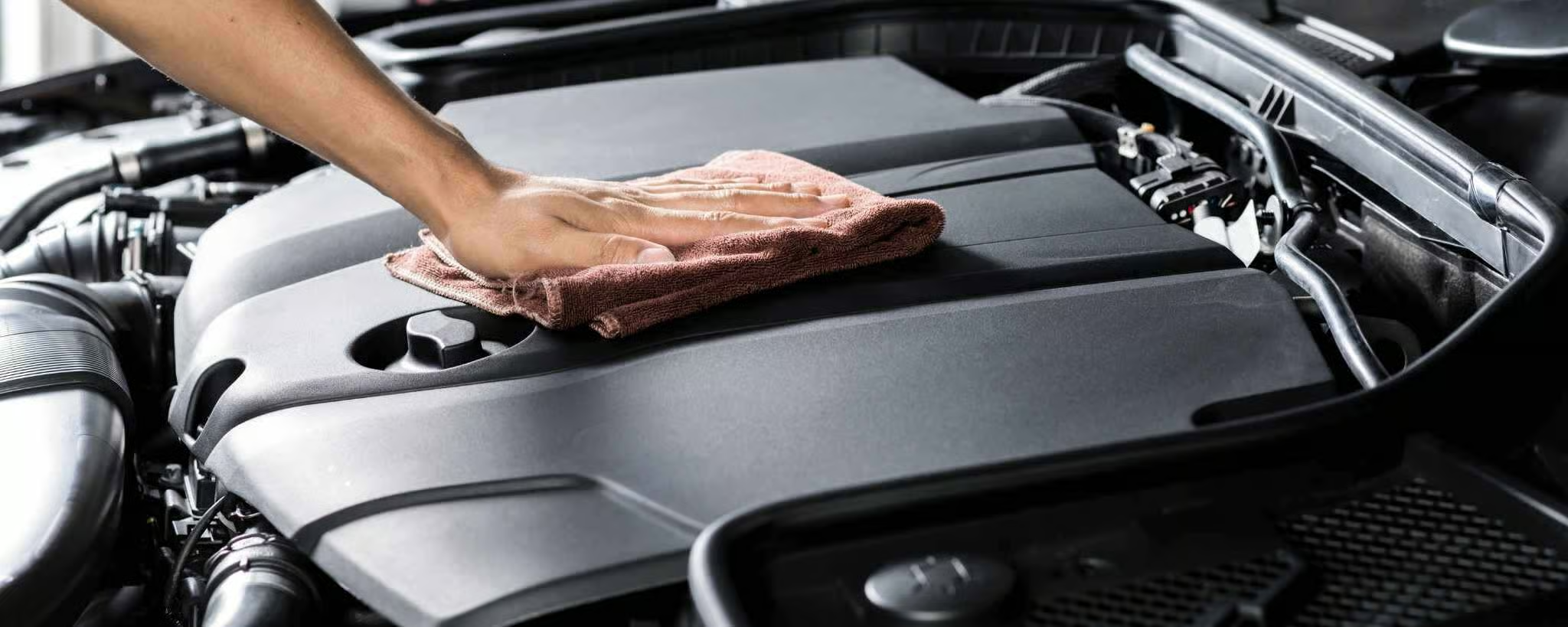
Cleaning can improve appearance and make developing problems easier to notice. Always follow the vehicle manufacturer’s recommendations, particularly concerning water exposure and sensitive electrical systems.
Start by removing loose debris using a suitable method. Use compatible cleaning products and avoid directing high-pressure water at connectors, sensors, air intakes, or other vulnerable areas. Allow the compartment to dry appropriately before returning the vehicle to normal use.
Maintain Different Surfaces Correctly
Plastic, rubber, painted metal, and composite surfaces may require different cleaning approaches. A product that works well on one material may stain or damage another.
Test unfamiliar cleaners on an inconspicuous area and follow the manufacturer’s instructions. Avoid excessive dressing products that leave slippery residue or attract dust.
Installation and Quality Checks
Before fitting a replacement cover, compare it with the vehicle’s original component and verify that the mounting points align. Do not force a part into position if its dimensions or shape appear incorrect.
Use the specified hardware and installation procedure. Incorrect fasteners or improvised mounting methods can allow a cover to move, rattle, or contact nearby components.
After installation, inspect the clearances around hoses, wiring, hot surfaces, and moving mechanisms. Confirm that the cover is secure and does not interfere with access to essential systems.
If installation involves components close to exhaust parts, electrical systems, or other safety-critical equipment, seek assistance from a qualified automotive technician.
Maintaining a Consistent Appearance
An organized engine compartment usually benefits from restraint. A clean factory-style layout with compatible finishes can look more professional than a collection of unrelated accessories.
Inspect the compartment periodically and address loose fasteners, cracked panels, or surface deterioration as soon as practical. Keeping records of installed components and maintenance work can also help with future servicing.
The aim is a durable and maintainable result, not simply a temporary shine for photographs.
Conclusion
Improving an engine compartment begins with understanding its existing condition and the purpose of each component. Suitable covers, careful cleaning, secure installation, and regular inspection can improve presentation while preserving access and functionality. By prioritizing compatibility and technical suitability over appearance alone, vehicle owners can create an engine bay that looks organized and remains practical to maintain.
FAQs
1. Do engine covers serve a purpose beyond appearance?
Some do. Depending on the vehicle, a cover may provide limited protection, contribute to noise management, or influence airflow. Its specific function should be confirmed before removal or replacement.
2. How can I tell whether a custom engine cover will fit?
Check the exact vehicle and engine configuration, mounting points, dimensions, and required clearances. Ask the supplier to confirm compatibility before ordering.
3. Is it safe to wash an engine compartment with water?
Cleaning methods depend on the vehicle and its components. Follow the manufacturer’s guidance, protect sensitive electrical areas, avoid inappropriate high-pressure spraying, and use suitable cleaning products.