A no-start car can feel like a dead battery, but the battery itself is not always the guilty part. Many battery terminal symptoms show up when power cannot move cleanly from the battery posts into the cables, starter, and vehicle electronics. You may see a white, blue, or green crust around the posts. You may hear a click, watch the dash lights fade, or get one random start after several failed tries. That is what makes this problem so frustrating for drivers across the USA, from cold Midwest mornings to hot Arizona parking lots. A battery can test fair and still fail at the connection. For practical repair guidance, trusted automotive repair coverage can help drivers think beyond the first guess. The real issue is resistance. Corrosion acts like a dirty gate between stored power and the parts that need it. Find that gate early, and you may avoid a tow, a wasted battery purchase, or a starter replacement you never needed.
Why Corrosion at the Battery Posts Stops a Good Battery From Acting Good
Corrosion does not need to cover the whole battery to cause trouble. A thin ring under the clamp can block enough current to make the car act sick. That is the trick. The battery may still hold voltage, yet the starter cannot get the heavy current it needs for the first hard turn of the engine.
The no-start clue most drivers misread
The most common mistake is calling the battery dead too soon. A weak battery and a dirty connection can look almost the same from the driver seat. You turn the key or press the start button, and the car gives you a slow engine crank, a chatter of clicks, or silence with a few dash lights still glowing.
Here is a normal example. A driver in Ohio parks outside during a cold January night. The battery reads over 12 volts on a cheap meter the next morning, but the engine barely turns. The positive terminal has a pale blue crust tucked under the clamp. The battery has stored power. The car cannot pull it cleanly.
That is the non-obvious part. Voltage is not the whole story. Starting an engine demands a strong path, not a pretty number on a screen. A corroded connection can pass enough power for the radio and dome light, then fail when the starter asks for far more.
What the crust is telling you
Car battery corrosion often looks like powder, fuzz, or dried chalk. White deposits may show around the clamp. Blue or green buildup often appears where copper in the cable end reacts with battery gases and moisture. Road salt, heat, old seals, and battery acid vapor can all make the mess worse.
The color helps, but the location matters more. Heavy buildup on the positive side can point toward acid vapor around the post or charging stress. Corrosion on the negative side can appear when the battery spends too much time undercharged. Those patterns are not a final diagnosis, but they give you a direction.
Do not judge the problem only by size. A huge crusty mound is easy to blame. A thin dirty film hidden between the post and clamp can stop the car with less drama. That is why a quick glance from above often misses the real battery cable connection problem.
Battery Terminal Symptoms That Point to Connection Trouble
Once the connection starts failing, the car usually speaks in small warnings before it strands you. The challenge is that those warnings overlap with a weak battery, bad alternator, worn starter, or parasitic drain. You need to read the pattern, not one sign by itself.
Slow crank, clicking, and fading lights
A slow engine crank is one of the clearest warning signs. The starter sounds tired, almost like it is pushing through mud. Sometimes you hear one loud click. Other times you hear rapid clicking as the starter relay tries to work but cannot get steady power.
Lights can tell the same story. Headlights may look normal until you try to start the car, then dim hard. The dashboard may flicker. The infotainment screen may reboot. Power locks may sound weak. These signs happen because the poor connection cannot keep voltage stable under load.
A useful detail is inconsistency. A failing battery often gets worse in a steady way. A dirty terminal can act random. The car may start after you wiggle the cable, slam the hood, or wait ten minutes. That does not mean the problem fixed itself. Vibration moved the contact point for a moment.
When electronics act strange before the engine fails
Modern cars can complain before they quit. You might see battery warnings, traction lights, steering assist messages, key detection errors, or random low-voltage codes. That can make the repair path messy, especially on newer SUVs, pickups, and push-button-start cars.
A poor battery cable connection can disturb control modules before it fully blocks the starter. The computer does not know the clamp is dirty. It only sees voltage drops and unstable power. That is why one corroded terminal can cause a dashboard that looks more expensive than the real fix.
This is where many owners spend badly. They replace a battery first, then a starter, then ask why the no-start came back. Before chasing deeper electrical faults, inspect the posts, clamps, grounds, and main power cable. For related checks, save this starter motor warning signs guide for comparison.
How to Confirm the Terminal Is the Problem Without Guessing
The best test starts with your eyes, then your hands, then a meter if you have one. Guessing costs money. A battery shop may sell you a new battery because the old one tested weak after repeated failed starts, but the corrosion may have caused those failed starts in the first place.
Start with a safe visual and touch check
Park on level ground, shut the car off, and keep metal jewelry away from the battery area. Look for powder, wetness, swelling, cracked casing, loose clamps, frayed cable ends, or a rotten-egg smell. If the case is cracked, bulging, leaking, or hot, stop and get professional help.
Next, check the clamp movement. A clamp should not twist by hand on the post. If it moves, the starter may lose contact under load. That loose fit can create the same no-start as thick corrosion, and the two often travel together. A loose clamp also lets tiny arcs and heat marks form over time.
Use care with newer vehicles. Some batteries sit under seats, in trunks, or under covers. Some cars need memory procedures after disconnecting power. Hybrids and EVs also carry high-voltage systems that are not part of normal 12-volt cleaning. When in doubt, read the owner manual before touching anything.
Use voltage drop thinking, not blind parts swapping
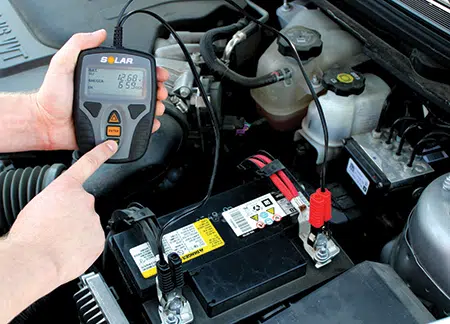
A simple multimeter can help, but the test must match the symptom. Open-circuit battery voltage only tells you what the battery shows while resting. The better clue is what happens when the car tries to crank. A big drop across a cable or connection means current is losing the fight before it reaches the starter.
A shop can perform a voltage drop test across the positive cable, negative ground path, and clamps. That sounds technical, but the idea is simple. Power should move through the cable, not get spent at the connection. If the meter shows loss at the terminal, cleaning or replacing the cable end comes before bigger parts.
A jump-start can confuse the picture. If the car starts with jumper cables clamped onto cleaner metal, the battery may get blamed. Yet the jump leads may have bypassed the weak contact point. That is the counterintuitive trap. A successful jump does not prove the battery was the only failure.
Cleaning, Repairing, and Preventing the Problem From Coming Back
Cleaning can work well when the cable end and post still have solid metal under the crust. It is not a magic reset. If the clamp is eaten thin, cracked, stretched, or green inside the wire, the repair needs more than baking soda and a brush.
Clean the right surfaces in the right order
Wear eye protection and gloves. Disconnect the negative cable first, then the positive cable. Keep the cable ends separated so they cannot spring back into contact. Mix baking soda with water into a paste, apply it to the corroded area, and let it neutralize the residue. Do not pour the mixture into battery vents.
Scrub the post and the inside of the clamp until the contact surfaces look bright. A terminal brush works better than a random shop rag because the inside of the clamp matters as much as the outside. Rinse lightly, dry the area, reconnect positive first, then negative, and tighten the clamps so they sit fully down on the posts.
After cleaning, the car should crank with more confidence. If the slow engine crank remains, keep testing. The battery may be weak, the ground strap may be corroded, or the starter may be drawing too much current. Clean terminals are the starting point, not the end of diagnosis.
When replacement beats another cleaning
Car battery corrosion that returns within weeks deserves attention. A fresh battery with fast terminal buildup may have a venting issue, overcharging concern, poor clamp fit, or residue left under the connector. Smearing grease on a dirty post only seals the problem in place.
Replace the terminal end if the clamp cannot tighten, if the bolt bottoms out before it grips, or if the metal has deep pitting. Replace the cable if corrosion has traveled under the insulation. That hidden green powder inside the wire raises resistance where a brush cannot reach.
Prevention is simple but not careless. Clean metal first, tighten the connection, then add a light protective coating made for battery terminals. Check the area before winter and before peak summer heat. AAA also offers battery maintenance advice that supports regular checks, clean connections, and testing before failure. For broader ownership planning, pair this with a car battery replacement guide.
Conclusion
A car that refuses to start does not always need a new battery, starter, or alternator. Sometimes it needs a clean, tight path for power. That sounds small until you remember how much current the starter demands in the first second. Battery terminal symptoms matter because they reveal a failure point that many drivers can see before the tow truck arrives. Look for crust, loose clamps, flickering lights, clicking, random starts, and weak cranking after the car sits. Then confirm the connection before spending money on bigger parts. The smartest repair is not the most expensive one. It is the one that matches the evidence. Keep the posts clean, keep the clamps tight, and take repeat corrosion seriously. Your car does not need perfect conditions to start every morning. It needs a clear electrical path. Give it that, and many no-start scares end in the driveway instead of the repair lane.
Frequently Asked Questions
How do I know if corrosion is stopping my car from starting?
Look for white, blue, or green buildup around the battery posts, then watch what happens during starting. Clicking, weak cranking, flickering dash lights, or a start that improves after moving the cable all point toward poor terminal contact.
Can a corroded battery terminal drain the battery overnight?
It usually blocks charging and starting current more than it drains power by itself. Still, a poor connection can stop the alternator from restoring charge fully, so the battery may seem dead after sitting even when another issue is not present.
Is it safe to clean battery corrosion at home?
Yes, if the battery case is not cracked, swollen, leaking, or hot. Wear gloves and eye protection, remove the negative cable first, and avoid getting baking soda mixture inside battery vents. Stop if you smell sulfur or see wet acid.
Why does my car start after I wiggle the battery cable?
Wiggling can briefly improve contact between the clamp and battery post. That quick start is a clue, not a fix. The clamp may be loose, dirty inside, stretched, or damaged enough to lose connection again when the car vibrates.
Can dirty terminals make the alternator look bad?
Yes. A poor connection can prevent the battery from receiving charge properly, which may look like an alternator issue during a quick check. Clean and tighten the terminals before judging the charging system, then test voltage while the engine runs.
Should I replace the battery if there is corrosion on the post?
Not automatically. Clean the posts, inspect the clamps, and test the battery under load. Replacement makes sense if the battery is old, weak, leaking, swollen, or corroding again soon after proper cleaning and tightening.
What color is normal battery corrosion?
No buildup is ideal, but white, blue, or green residue is common on lead-acid batteries. The color can vary based on metals, moisture, acid vapor, and road salt. Location and starting behavior matter more than color alone.
How often should I check my car battery terminals?
Check them at least before winter, before peak summer heat, and whenever starting feels slower than normal. Drivers in salty, humid, or high-heat regions should inspect more often because corrosion tends to build faster in those conditions.