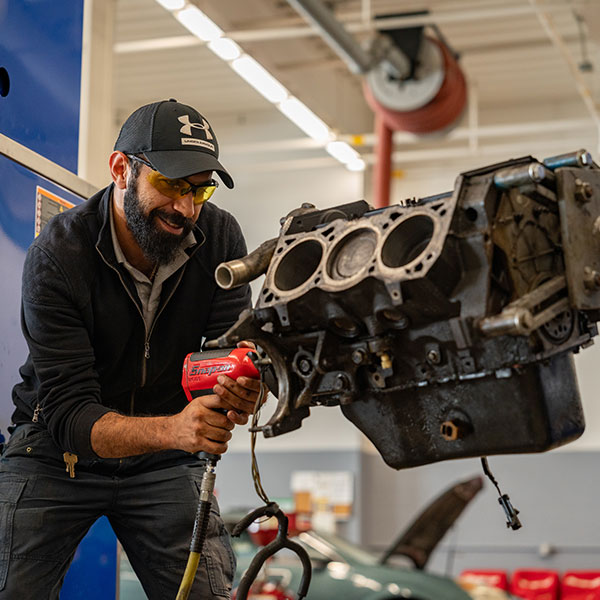

A Ghibli does not always shout before it gets hot. Sometimes it whispers through a faint coolant smell, a small pink or orange crust near a hose joint, or a temperature needle that sits one mark higher than usual in traffic. Water pump failure in this sedan matters because the engine can move from “slightly warm” to “expensive repair” faster than many owners expect, especially during summer driving in Texas, Florida, Arizona, or Southern California. The first goal is simple: catch weak coolant movement before the dashboard warning turns into steam. Owners comparing repair choices, used-car inspection notes, and premium auto ownership guidance should treat cooling problems as early-warning work, not panic work. A Maserati’s badge does not make it immune to basic heat physics. If coolant stops moving well, metal gets hot, seals suffer, oil thins, and small leaks turn into major risk. The smartest owner learns the quiet signs, checks them cold, and acts before the car forces the issue.
Why the Ghibli Cooling System Gives Early Clues
The Maserati Ghibli’s cooling system has a harder job than many drivers assume. It is not only keeping the engine from boiling over. It is managing heat during idle, hard acceleration, stop-and-go traffic, and quick temperature swings after a highway exit. That is where tension begins. A car may feel strong on the freeway, then show its weakness at a red light because airflow drops and the coolant pump must carry more of the burden.
Why heat problems often start small
A weak pump rarely fails like a light switch. More often, the bearing wears, the seal starts to seep, or the impeller loses efficiency. The driver sees nothing dramatic at first. Maybe the coolant reservoir needs a small top-off every few weeks. Maybe the cabin heater acts uneven on a cold morning. Maybe the engine bay smells sweet after parking.
That slow start is what tricks owners. They wait for a warning light, but a cooling system may be losing control before the gauge climbs. In a Ghibli used for short city trips, the warning can stay hidden because the car cools down before pressure builds long enough to expose the leak.
The counterintuitive part is that a weak water pump can look better at speed than it does at idle. Highway air can mask poor coolant movement. Then the same car exits into slow traffic, heat soaks under the hood, and the temperature starts creeping.
What makes luxury sedans less forgiving
A performance sedan packs heat tightly. The engine bay is crowded, covers hide early staining, and small leaks can dry before they leave a puddle. That means the driveway may stay clean even while coolant is escaping. You may smell the problem before you see it.
There is also the ownership pattern. Many Ghiblis in the U.S. are driven as weekend cars or commuter status cars, not basic daily beaters. Long parked periods can let seals dry. Then one hot commute exposes the weak spot.
For a used Ghibli buyer in Atlanta or Phoenix, this matters during inspection. A clean exterior and strong test drive do not prove the cooling system is healthy. Ask for service records, look for coolant residue around the pump area, and check whether previous repairs used correct parts and coolant. Use the NHTSA recall lookup by VIN for safety campaigns, but remember that a common repair issue is not always a recall.
Water Pump Failure Warning Signs Before Overheating
The best time to diagnose cooling trouble is before the warning message appears. By then, the system may already be under stress. Water pump failure often shows up as a pattern: small coolant loss, odor, bearing noise, uneven heat, and temperature movement that does not match the weather or driving load.
Coolant leak symptoms that deserve attention
The easiest clue is dried coolant. On many cars, coolant leaves a crusty stain near the leak point. Depending on coolant type and age, it may look pink, orange, white, or chalky. In the Ghibli, engine covers and tight packaging can hide it, so use a flashlight when the engine is fully cool.
Coolant leak symptoms can also show up through smell. A sweet odor after shutting off the car is not normal. If it appears after highway driving, hill climbs, or air-conditioning use, pressure may be pushing coolant past a seal or hose joint.
Do not judge the leak only by puddles. A small seep near a hot surface can evaporate before it hits the ground. That is why a low reservoir, dried residue, and smell together are stronger evidence than any single sign alone.
Noises, temperature swings, and heater clues
A worn pump bearing can make a light grinding, chirping, or whining sound near the front of the engine. It may change with rpm. That noise should not be ignored, because a bearing issue can become a seal issue, and a seal issue can become coolant loss.
Temperature behavior matters too. If the gauge rises in traffic, settles on the highway, then rises again after parking, the system may be struggling when airflow is low. Maserati Ghibli overheating risk often appears in those in-between moments, not during the clean, open-road part of the drive.
The cabin heater can tell a story. Weak heat at idle, heat that improves with rpm, or random warm-cool changes can point to air in the system or poor coolant flow. It is not proof by itself, but it belongs on the same checklist.
Diagnosing the Problem Without Guessing
Guessing gets costly on a Maserati. Replacing parts because they “might” be bad can burn money and still leave the real fault in place. A careful diagnosis separates the pump from hoses, thermostat problems, radiator issues, cap pressure trouble, and trapped air. That order saves time.
Start cold, then test under pressure
Begin with the engine fully cold. Check the reservoir level, cap condition, visible hoses, clamps, and any dried coolant trails. A cold inspection keeps you safe and gives the system a fair reading. Opening a hot cooling system can cause burns, so this is not a place for bravado.
A pressure test is often the next smart step. It lets a shop apply pressure to the cooling system without running the engine. Small leaks may show themselves around the water pump, crossover pipe, radiator, hose ends, or reservoir.
This is where many owners learn something unexpected. The part dripping may not be the part that failed. Coolant can run along a bracket, cover, or hose before falling somewhere else. A good technician traces the highest wet point, not the lowest drop.
Rule out thermostat, fan, and air pockets
A thermostat that sticks closed can mimic pump trouble. Electric fan faults can do the same in traffic. Air trapped after a coolant service can create odd heater performance and hot spots. These are not side issues; they are part of the same heat-control chain.
For owners reading engine cooling repair basics, the key idea is flow. Coolant must move, air must leave, fans must pull heat through the radiator, and pressure must stay stable. If one part fails, the whole system looks guilty.
Ask the shop to document test results. “Needs water pump” is weaker than “pressure test shows seep from pump weep area” or “bearing noise confirmed with belt inspection.” Clear notes help if you sell the car later or compare quotes.
Repair Costs, Timing, and Smart Ownership Choices
Cooling system repair cost on a Maserati depends on labor access, parts choice, related hoses, coolant, and shop rate. A general estimate can help, but your exact bill depends on model year, engine version, local labor pricing, and what else is found during teardown. A dealer in Los Angeles will not price work like an independent European shop in Ohio.
Why the cheapest quote can cost more
A low quote may cover the pump only. That sounds good until an old hose, clamp, belt, or thermostat housing fails a month later. Cooling repairs often overlap, because the labor to reach one part may expose others that are aging.
That does not mean approve every upsell. It means ask which parts are being disturbed during the job. If a hose must be removed, a brittle clamp looks tired, or coolant has contaminated nearby rubber, replacing related pieces may be sensible.
Cooling system repair cost should be judged against engine risk. Saving a few hundred dollars can look foolish if the car overheats and damages gaskets, sensors, or internal parts. Heat is not patient. It collects interest.
Dealer, independent shop, or DIY?
A Maserati dealer gives factory procedures, software access, and brand-specific parts support. That can matter if the car has warranty coverage, open campaigns, or complex diagnosis. Maserati’s U.S. recall portal also lets owners check active campaigns by VIN.
A skilled independent European shop can be a strong choice for out-of-warranty cars. The best ones know the platform, keep proper pressure-test tools, and explain the repair path without drama. Look for Maserati experience, not only “European car” branding.
DIY is possible only for owners with space, tools, and patience. The risk is not only the pump swap. It is bleeding air, using the right coolant, torquing parts correctly, and confirming there are no leaks under pressure. For many owners, DIY diagnosis is fine; DIY repair is where the margin gets thin.
Conclusion
Cooling trouble rewards the owner who acts early. A Ghibli with a faint coolant smell, slow reservoir loss, odd heater behavior, or rising temperature in traffic is already asking for attention. Waiting for smoke is not tough; it is expensive. The smartest move is to inspect the system cold, confirm the leak path, pressure-test it, and compare repair options before the car overheats. Water pump failure should be treated as a flow problem first and a parts problem second, because hoses, fans, thermostats, air pockets, and caps can all confuse the picture. Maserati Ghibli overheating is avoidable in many cases when the early signs are taken seriously. Build cooling checks into oil-service visits, keep records, and do not let a luxury badge talk you out of basic mechanical discipline. For more ownership planning, review used luxury car maintenance tips before your next service visit.
Frequently Asked Questions
How do I know if my Maserati Ghibli water pump is going bad?
Look for slow coolant loss, sweet odor after driving, dried coolant residue, bearing noise, uneven cabin heat, or temperature movement in traffic. One sign alone may not prove it, but several signs together point toward a cooling system inspection.
Can I drive a Maserati Ghibli with a small coolant leak?
Short driving may be possible, but it is a gamble. A small leak can grow under pressure and heat. Check the coolant level cold, avoid hard driving, and book diagnosis soon. Stop driving if the temperature rises or a warning appears.
What causes Maserati Ghibli overheating in traffic?
Low coolant, weak pump flow, trapped air, fan faults, thermostat trouble, radiator blockage, or cap pressure loss can all cause heat to rise at low speeds. Traffic removes natural airflow, so the cooling system has less help from outside air.
Are coolant leak symptoms always visible on the ground?
No. Coolant can dry on hot engine parts before it reaches the driveway. You may smell it or see crust near hoses, clamps, or the pump area. A clean parking spot does not prove the system is sealed.
How much does cooling system repair cost on a Ghibli?
Costs vary by engine, model year, shop rate, and related parts. Pump replacement can cost far more at a dealer than at an independent shop. Ask for a written quote showing parts, labor hours, coolant, and any added hoses or clamps.
Should I replace the thermostat with the water pump?
It depends on diagnosis, mileage, and access. If the thermostat is old, suspect, or already being disturbed during the repair, replacement may make sense. If tests show it works and access is separate, replacing it may not be needed.
Is a Maserati water pump issue covered by recall?
Do not assume that. Recalls are VIN-specific and safety-based. Check NHTSA and Maserati’s official recall tools with your VIN. A known repair pattern or owner complaint does not automatically mean there is an active recall for your car.
What should I ask a shop before approving repair?
Ask what test confirmed the fault, where the leak starts, whether the system was pressure-tested, which parts are included, what coolant will be used, and how air will be bled afterward. Good answers are specific, not vague guesses.