
That low rear corner in the driveway is more than a bad look on a Land Rover Discovery. A leaking air suspension bag often starts as a slow overnight sag, then becomes a warning chime, a stiff ride, or a compressor that runs too long. In the U.S., a single air spring repair often lands around $1,200 to $1,500 at many shops, while a tired compressor can push the invoice higher. The smart move is diagnosis before parts shopping because a weak compressor may be the victim, not the first failure. Drivers reading plain-English repair guides want the same thing: a clear answer before the service advisor starts speaking in codes. A Land Rover Discovery suspension fault can come from a torn rubber bladder, a cracked line, a valve block leak, a height sensor issue, or software reacting to low pressure. The fix may be one corner, two aging rear springs, a compressor dryer, or a reset and calibration. Guessing gets expensive fast.
Why the Discovery Starts Sagging Before It Starts Complaining
Air suspension gives the Discovery its best trick: a heavy, three-row SUV that can ride with comfort on the highway and still lift itself when the road turns ugly. That comfort depends on air pressure staying where the control module expects it. Once one corner starts losing pressure, the vehicle may look fine while you drive, then kneel overnight like it is tired of pretending.
When a Land Rover Discovery Suspension Fault Points to a Leak
The classic sign is one corner sitting low after parking. A rear corner may drop first because many Discoveries spend their lives carrying groceries, dogs, tools, luggage, or kids in the third row. The rubber bladder flexes every mile, and age does not ask how carefully the SUV was driven.
A small leak can hide during a test drive. The compressor fills the spring, the height looks normal, and the seller says it has always been fine. Then the vehicle sits through a cold night in Ohio or Colorado, and one wheel arch is lower by morning. That is when the real story shows up.
Not every Land Rover Discovery suspension fault means the same part failed. A warning on the dash may be the system saying it cannot reach target height quickly enough. That could be a leaking air spring, but it could also be a tired compressor trying to feed a leak it did not create.
Why Air Compressor Failure Can Follow a Small Leak
Air compressor failure often arrives late to the party. The compressor is asked to replace lost air again and again, so it runs hotter, longer, and more often than it should. By the time the dash warns you, the original leak may have already punished the pump.
This is the part many owners miss. The loud compressor is not always the villain. It may be the overworked employee who stayed late every night because one corner kept bleeding pressure in the parking lot.
A shop that replaces only the compressor without checking for leaks can hand you a fresh invoice and a short break from the problem. A month later, the same sag returns. A careful test uses scan data, height readings, leak spray, and time. Time matters because slow leaks do not always confess in five minutes.
Air Suspension Bag Failure Costs Without the Sticker Shock
Cost fear is what sends many Discovery owners into forums before they call a shop. That makes sense. Luxury SUV repairs can feel vague until the estimate lands. The better way to read the price is to split it into diagnosis, parts, labor, and the “while we are here” items that can turn a single-corner fix into a bigger decision.
What Shapes the Air Spring Replacement Cost
The air spring replacement cost depends on model year, front versus rear position, part brand, labor rate, and whether the shop can reuse nearby hardware. A Land Rover dealer in Los Angeles or Northern Virginia may charge more per hour than an independent European specialist in Kansas City. The same failed part can produce two different invoices.
Parts also vary. Original-style parts often cost more, while high-quality aftermarket air springs may bring the bill down. Cheap unknown parts can make the first estimate look friendly, then cost more when the ride height will not settle or the rubber ages early.
The air spring replacement cost should also include diagnosis, not guesswork. Paying an hour for a proper leak test feels annoying until it prevents a wrong $1,500 repair. A good invoice tells you which corner failed, what codes were stored, and whether the compressor met pressure targets.
Why the Cheapest Quote Can Become the Expensive One
A low quote can be honest. It can also be incomplete. Some shops price the spring only, then add calibration, clips, seized fasteners, or extra labor after the SUV is already on the lift. That is not always shady. Older Discoveries fight back.
Here is a common example: a 2018 Discovery in Texas comes in with the left rear sitting low. The shop replaces that spring, clears the codes, and the SUV stands level. Two weeks later, the right rear drops because it is the same age and has lived the same life. The owner feels burned, even though the second part was already close to failure.
The counterintuitive answer is not always “replace everything.” Sometimes one corner is enough, especially after road damage. But if both rear air springs are original and cracked, replacing the pair can save a second labor charge. Ask the shop to show you the old rubber. A photo can tell a better story than a sales pitch.
Choosing the Right Fix Instead of Replacing Everything
A Discovery suspension repair should start with a path, not a pile of parts. The system has air springs, lines, valve blocks, sensors, a reservoir, a compressor, wiring, and software logic. Replacing the most expensive part first is not diagnosis. It is gambling with a parts catalog.
Repair, Pair, or Convert: What Makes Sense
For many owners, replacing the failed air spring keeps the vehicle closest to how Land Rover built it. You keep access height, off-road height, load leveling, and the smooth ride that made the SUV appealing in the first place. That matters if you tow, carry passengers, or use the cargo area hard.
Replacing springs in pairs makes sense when age is the problem. If one rear spring is cracked from years of flexing, the other rear spring may not be far behind. The shop should inspect the matching side, not scare you. There is a difference.
Coil conversion kits exist, and some owners like them because they remove air leaks from the equation. The tradeoff is real. You give up factory height control, and the vehicle may lose part of its character. Before choosing that route, read a luxury SUV repair cost guide and decide whether you want to preserve the original ride or reduce long-term system risk.
What a Good Diagnosis Should Include
A proper inspection starts with the obvious: ride height at each corner, warning messages, and whether the vehicle drops while parked. Then it moves to fault codes, compressor run time, pressure build speed, and leak testing at the spring folds, air line fittings, and valve block.
The technician should also ask when the sag happens. Overnight? After rain? Only in cold weather? Only when parked at access height? Those details sound small, but they help separate a rubber leak from a valve issue or height sensor confusion.
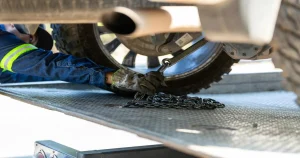
Do not ignore service procedure details. Air suspension vehicles need safe lifting points, and the system should not be allowed to fight the jack while the SUV is in the air. A careful shop knows that. A careless one can turn a repair into fresh damage.
How to Prevent the Second Repair From Following the First
Once the Discovery is sitting level again, the job is not fully over. The next question is why the part failed and whether the rest of the system is being protected. Air suspension does not need constant attention, but it does punish neglect in quiet ways.
Habits That Protect the Compressor and Springs
Keep an eye on parked height. Once a month, look at the wheel arches in the morning before starting the engine. You do not need a tape measure every time. Your eyes will learn the normal stance.
Wash road salt and packed mud away from the suspension area after winter trips or trail use. Rubber folds trap grit, and grit rubs. Owners in Michigan, New York, Pennsylvania, and mountain states should be more alert because cold weather can make older rubber stiffer and leaks easier to spot.
Do not cycle the height control for fun over and over in a parking lot. The system can raise and lower the vehicle, but repeated use makes the compressor work harder. A non-obvious truth: using the feature less can preserve the feature longer.
What to Check Before Buying a Used Discovery
A used Discovery can look perfect on a dealer lot because the compressor has already lifted it. Arrive early if you can. Look at it before anyone starts it. If one corner is asleep while the others stand tall, you have useful bargaining power.
During the test drive, listen after startup. A brief compressor run can be normal. Long, repeated running is a warning. Raise and lower the suspension once, then see if the system responds without drama. Bring a simple flashlight and look for cracked rubber folds, especially on older vehicles.
Before you sign, check the VIN through the NHTSA recall lookup, then read a used Land Rover inspection checklist. Recalls are not the same as wear repairs, but open safety work tells you something about how the SUV was cared for. Maintenance history tells the rest.
Conclusion
A sagging Discovery is not a mystery to fear, but it is also not a repair to guess through. The cost depends on which part failed, how long the leak has been present, and whether the compressor has been dragged into the problem. A failed air suspension bag is best handled early, before one corner turns into a system-wide invoice. Ask for diagnosis, photos, code notes, and a clear reason behind every part on the estimate. The owner who wins here is not the one who finds the cheapest quote. It is the one who fixes the first failure before it teaches other parts to fail. Treat the suspension like a system, not a single warning light, and the Discovery becomes far less intimidating to own. Get the stance checked, price the repair with care, and make the fix before the next cold morning makes the decision for you.
Frequently Asked Questions
How much does it cost to replace a Land Rover Discovery air spring?
A single air spring repair often falls around the low-to-mid $1,000 range in the U.S., depending on labor rate, part choice, and location. Dealer pricing may be higher than an independent Land Rover specialist. Diagnosis, taxes, and related repairs can change the final bill.
Can I drive with a sagging Land Rover Discovery suspension?
Short local movement may be possible, but regular driving is a bad idea. A sagging corner can hurt handling, stress shocks, and overwork the compressor. If the vehicle sits low or shows a red warning, arrange repair or towing instead of pushing your luck.
What causes one corner of a Discovery to sit lower overnight?
A slow leak in the air spring is the common cause, especially when the drop appears after parking for hours. Other causes include leaking fittings, a valve block issue, or height control trouble. The pattern matters, so note when and where the sag appears.
Is the compressor always bad when the suspension warning appears?
No. The compressor may be weak, but it may also be working too hard because another part is leaking. Replacing the pump without leak testing can waste money. A shop should test pressure build, stored codes, and air loss before naming the compressor.
Should I replace one air spring or both on the same axle?
One spring is fine when damage is isolated and the matching side looks healthy. Replacing both can make sense when age cracking appears on each side. Ask for photos of the old rubber and a written reason before approving a pair.
Are aftermarket air springs safe for a Land Rover Discovery?
Good aftermarket parts can work well when they come from a trusted brand and match the vehicle correctly. The risk is cheap unknown parts with poor fit or rubber quality. Saving money only helps when the part lasts and the ride height calibrates cleanly.
Is a coil spring conversion worth it on a Discovery?
It can be worth it for owners who want fewer air-system repairs and do not care about factory height control. It is less appealing if you tow, travel loaded, go off-road, or value the original ride. The choice depends on how you use the SUV.
How can I check for leaks before paying for parts?
Park the vehicle overnight and compare all four corners before startup. Listen for long compressor runs and note any warning messages. A shop can confirm the leak with scan data, pressure tests, and soapy leak spray around air springs, fittings, and valve areas.